


Best Ingredients for Skin Barrier Repair That Actually Work


15/04/2026
A damaged skin barrier needs more than a thick moisturizer. Some of the best ingredients for skin barrier repair that actually work are ceramides for structural repair, niacinamide for strengthening from within, peptides for repair signaling, panthenol for tissue healing, and squalane for lightweight lipid replenishment. When used together in the right order, they rebuild what slow damage, harsh actives, and daily environmental stress have worn down.

Introduction
You switch to a gentler cleanser, reduce the use of actives and even drink more water. Yet, your skin stings, flakes, and reacts to products it used to handle without any issue. Most of the time, this is not a wrong product problem. It is a damaged barrier problem. This is where you only need the best ingredients for skin barrier repair. The most effective ones are ceramides, niacinamide, peptides, and many more to help your skin barrier feel more rejuvenated. Continue reading to find out how these ingredients work, why your skin needs them, and how to use them to get your glow back.

What Is Breaking Your Skin Barrier Down?
Your skin barrier is called the stratum corneum. It is a layered structure of skin cells held together by a lipid matrix. That matrix is made up of ceramides, fatty acids, and cholesterol working together. When it weakens, two things happen: water escapes faster than your skin can hold onto it, and irritants get in more easily.
Here are the most common reasons why this happens:
- Over-exfoliation with alpha hydroxy acids (AHAs), beta hydroxy acids (BHAs), or retinoids without adequate recovery time
- Long hot showers, especially in dry or air-conditioned environments
- Harsh cleansers that strip the skin's natural oils
- Chronic stress and disrupted sleep, both of which interfere with overnight skin repair
- Urban pollution, which causes oxidative damage at the surface level

Which Ingredients Actually Repair the Skin Barrier?
Not every moisturising ingredient works the same. Some rebuild structure. Others attract and hold water. Some reduce the inflammation that keeps a damaged barrier from recovering. Here is how the best ingredients for skin barrier repair work:
Ceramides
Ceramides are lipids that naturally make up about 50% of your skin's barrier lipid matrix. When the barrier is damaged, ceramide levels drop and structural repair pauses until they are replenished.
Topical ceramides integrate into the existing lipid matrix and restore the structural integrity that keeps moisture locked in and irritants out. Moreover, ceramide-rich formulas reduce transepidermal water loss (TEWL) and improve barrier function in people with eczema, atopic dermatitis, and general sensitivity.
There's one detail that most labels skip: the ceramide type. You should always look for formulas that contain multiple subtypes, specifically:
- Ceramide NP
- Ceramide EOP
- Ceramide NS
- Ceramide AS
- Ceramide AP
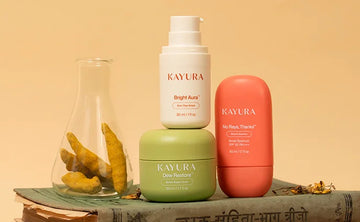
Kayura's Dew Restore Barrier Repair Cream uses all five subtypes in a single formula, alongside biomimetic peptides and plant-based anti-inflammatory extracts. This combination makes it a perfect option for sensitive and reactive skin.
Niacinamide
Niacinamide, also known as Vitamin B3, stimulates the skin's own production of ceramides, free fatty acids and cholesterol. It also strengthens the barrier against environmental stressors and reduces the low-grade inflammation that slows recovery.
At concentrations between 2 and 5%, it is one of the most effective and well-tolerated actives for sensitive skin management. Beyond the barrier, Niacinamide also:
- Regulates excess sebum production
- Fades post-inflammatory hyperpigmentation (PIH)
- Improves overall skin texture over time
Peptides
Peptides are short chains of amino acids that act as messengers inside the skin. Certain peptides specifically signal the skin to produce proteins involved in barrier integrity, such as involucrin and aquaporin.
- Aquaporin regulates how efficiently water moves through skin layers
- Involucrin strengthens the outer structural envelope of the skin cells themselves
By signaling the production of these proteins, peptides essentially tell lazy or damaged skin cells to get back to work repairing the wall.
Panthenol
Panthenol, also called Pro-Vitamin B5, converts to pantothenic acid inside the skin. From there, it plays a direct role in tissue repair and cellular regeneration, as it also does the following:
- Reduces surface sensitivity
- Improves skin flexibility and softness
- Speeds up healing of micro-damage that keeps the barrier cycling through breakdown and irritation
It is particularly effective for skin recovering from over-exfoliation, prolonged retinoid use, or clinical treatments. That is why you will consistently find it paired with ceramides in advanced barrier repair formulas.
Squalane
Squalane is a stabilized form of squalene, a lipid your skin naturally produces and produces progressively less of under stress or with age. It works as an emollient that reinforces the lipid layer, prevents overnight moisture loss, and keeps the skin surface flexible.
For sensitive or barrier-compromised skin, squalane is one of the most compatible emollients available, as it is:
- Non-comedogenic (won't clog your pores)
- Fast-absorbing
- Free from any microbiome disruption risk

What the Science Says: How Do These Ingredients Work Together?
No single ingredient repairs the barrier alone. Here is a simple breakdown of how these ingredients team up to get your skin back on track:
| Layer | Ingredient | What It Does |
|---|---|---|
| Structural rebuild | Ceramides (multi-type) | Restores the integrity of your skin's protective lipid matrix |
| Internal strengthening | Niacinamide | Stimulates the skin's own ceramide production |
| Repair signaling | Peptides | Activates barrier proteins like aquaporin and involucrin |
| Surface healing | Panthenol | Supports tissue repair and reduces sensitivity |
| Moisture sealing | Squalane | Locks hydration in without pore congestion |

How to Layer These Barrier Repair Ingredients
To actually see results, build a daily routine around these specific, proven ingredients.
- Start by applying a hydrating serum containing panthenol or niacinamide to damp skin to boost internal repair.
- Immediately follow with a moisturizer rich in ceramides, peptides, and squalane to patch and seal the barrier physically.
- Finally, protect your progress every single morning with a broad-spectrum SPF 30 or higher.
Stick strictly to this ingredient-focused regimen for eight to twelve weeks. By supplying the exact building blocks your skin needs, you will rebuild a genuinely stronger, significantly less reactive barrier.

Repair Your Skin Barrier With Proven Ingredients!
A damaged skin barrier does not need a complete routine overhaul. It needs the right ingredients, in the right combination, used consistently enough for real rebuilding to happen.
That's exactly why we developed Kayura's sensitive skin-safe range. We thoughtfully craft each product with these evidence-backed ingredients to deeply nourish and rebuild, without ever overwhelming a reactive complexion.

Also Read:
- Best Way to Use Niacinamide Serum for Oily Skin Without Triggering Breakouts
- Is Ascorbic Acid the Most Effective Form of Vitamin C?
More Useful Links:
Dew Restore Barrier Repair Cream | Haldi Hydration Essence | Karma Boost Vitamin C Serum
Frequently Asked Questions
Ceramides, niacinamide, peptides, panthenol, and squalane are the most evidence-backed. Each addresses a different layer of the repair process, which is why combining them outperforms any single ingredient.
Most people notice improvement within four to six weeks of consistent use. Full structural recovery can take eight to twelve weeks, depending on the severity of the damage.
Yes. At 2% to 5%, niacinamide is one of the most gentle and effective actives for barrier repair. It stimulates ceramide production and reduces inflammation without irritating sensitive skin.
Hyaluronic acid supports hydration, which helps the healing environment, but it does not rebuild barrier structure on its own. Always follow it with a ceramide-rich moisturizer, particularly in dry climates.
Avoid fragrance in all forms, high-percentage AHAs and BHAs above 5%, physical scrubs, alcohol-based toners, and full-strength retinoids. Choosing sensitive skin safe ingredients during active recovery is a clinical necessity, not a marketing preference.


Dew Restore™ Essence
Haldi Hydration Essence


Karma Boost™
Vitamin C + Antioxidant Serum


Golden Legacy™
Traditional Scalp & Hair Oil


No Rays, Thanks™
Mineral Sunscreen SPF 50 PA++++


