

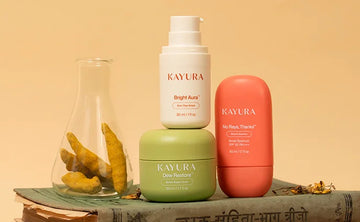

Is this how most skin concerns begin?


20/04/2026
Maybe it's the pollution outside, the stress you carried into today, or the blue light from the screen you're reading this on. Your skin doesn't distinguish between threats. It just responds. And this response is exactly how most skin problems start.
It's called inflammation.

The Root of Many Skin Concerns
Sometimes inflammation is easy to spot. The skin starts showing visible signs:
- Redness
- Breakouts
- Dehydration
But that's not always the case. It doesn't always announce itself as redness or a breakout. Sometimes it's just tightness you can't explain, dullness that won't budge, and sensitivity that appeared out of nowhere and never quite left.
You can usually recognize the trigger and the signs. But what happens in between is a biological chain reaction.

Decoding the Inflammation Cascade
Stage 1: The Alarm
Everything begins when the skin senses stress.
Stressors like pollution, sun exposure, over-exfoliation, harsh products, bacteria, lack of sleep, or sudden environmental changes can all trigger this response. The moment skin detects something unusual, it reacts quickly. Its internal defense system switches on. Cells move into protection mode and begin preparing the surrounding tissue to deal with the stress. At this stage, nothing may look different on the surface yet. But internally, the skin has already raised the alarm.
Stage 2: The Signal
Once the alarm goes off, the skin begins sending messages.
Cells release small chemical messengers that signal nearby cells that something isn't right. One cell alerts the next, and then the next, gradually expanding the area of response. As these signals spread through the surrounding tissue, more systems step in to help. Neighboring cells become more alert, the immune system is notified, and repair mechanisms begin preparing for action.
During this phase, the skin may start feeling slightly reactive: a faint flush, a bit of warmth, or sensitivity that wasn't there before. Sometimes these changes appear quickly. Other times, they build more gradually.
Stage 3: The Amplification
If the trigger persists or the signals keep circulating, the response becomes stronger.
Blood vessels in the area widen to increase blood flow, bringing immune cells and nutrients to the site. This helps the skin repair damage and defend itself. But this increased activity also creates the symptoms we recognize as inflammation.
This is when the skin begins to show visible signs:
- Redness from increased blood flow
- Swelling as fluid moves into the tissue
- Breakouts as the skin reacts to bacteria or irritation
- Sensitivity and stinging as nerve endings become more reactive
- Dehydration as the barrier struggles to hold onto moisture
What started as a protective response has now fully activated across the skin. And once the inflammatory cascade reaches this stage, the skin often needs help calming down and returning to balance.

So When Dealing With Inflammation, Timing Is Everything
Most skincare waits for the visible: the redness, the breakout, the sensitivity that's already taken hold. But by the time these appear, inflammation has already been building beneath the skin. The smarter move is earlier, stage one or two, before the signals amplify and the damage compounds. Catch it there, and many of the symptoms never surface at all.

The Kayura View
Skin is built to handle constant stress. But sustained pressure can keep the inflammatory response switched on, gradually disrupting the skin's ability to recover. Our focus is not to suppress inflammation, but to help skin return to balance before it becomes stuck in that reactive state. This translates into every product we create.
To quiet the inflammatory response, we turned to two of nature's most trusted calming ingredients.
- Turmeric, long known for its powerful anti-inflammatory properties
- Oat extract, widely known for its ability to soothe irritated, reactive skin
This is how Haldi Hydration Essence came to be.

The Inspiration: A Centuries-Old Ritual
The inspiration for this essence comes from a healing ritual practiced in Indian homes for thousands of years. Haldi milk, or turmeric milk, was often given when the body needed to settle and recover after illness, injury, or exhaustion. Simple, comforting, and deeply trusted.
Haldi Hydration Essence brings this same philosophy to skin. A formula designed to soothe inflammation early and help skin return to balance.

How Haldi Hydration Essence Stands Strong Against Inflammation
Created as part of the Dew Restore range, this lightweight essence is designed to step in early in the inflammatory cycle when the skin is still signaling stress and asking for support.
The Intervention

Turmeric's active compound, curcumin, works at the signaling stage by blocking the specific pathways that tell the skin to escalate its inflammatory response. It doesn't suppress the skin's defenses. It prevents the overreaction.
Oat extract works alongside it, calming the surface irritation that amplifies the signal further. Together, they interrupt the cycle before it compounds.
But interception is only half the job.
Recovery Begins After Calm

Skin that's been under chronic stress doesn't just need calm. It needs to rebuild.
This is where beta-glucan and ceramides step in. These barrier-supporting ingredients help replenish hydration and reinforce the skin's protective layer, allowing it to rebuild strength after the inflammatory response has been calmed. Over time, skin becomes better equipped to handle everyday stress by staying calmer, more hydrated, and more balanced.
The turmeric latte became a wellness ritual for a reason. And your skin deserves its own version. So, here it is. Discover Haldi Hydration Essence and bring skin back to calm, every day.
Also Read:
- Top Skincare Mistakes (According to Dermatologists); And How to Fix Them?
- Dermatologist-Tested Skin Care: What That Label Really Means
More Useful Links:
Haldi Hydration Essence | Dew Restore Barrier Repair Cream | Karma Boost Vitamin C Serum
Frequently Asked Questions
Pollution, sun exposure, over-exfoliation, harsh products, bacteria, lack of sleep, and sudden environmental changes can all trigger the skin's inflammatory response. The skin doesn't distinguish between these threats — it simply reacts to any perceived stress.
Visible signs include redness, breakouts, and swelling. But inflammation doesn't always announce itself loudly. Unexplained tightness, persistent dullness, and sensitivity that appeared out of nowhere are also signs that your skin's inflammatory response may be active.
By the time redness or breakouts appear, inflammation has already been building beneath the skin for some time. Addressing it at stage one or two — before signals amplify — means many of the visible symptoms never surface at all.
Turmeric's active compound, curcumin, blocks the specific signaling pathways that tell the skin to escalate its inflammatory response. It doesn't suppress the skin's natural defenses — it prevents the overreaction that causes visible damage.
Yes. It is formulated with turmeric, oat extract, beta-glucan, and ceramides — all of which are well-tolerated by sensitive and reactive skin. It is designed to calm inflammation early and rebuild the barrier without overwhelming a compromised complexion.


Dew Restore™ Essence
Haldi Hydration Essence


Karma Boost™
Vitamin C + Antioxidant Serum


Golden Legacy™
Traditional Scalp & Hair Oil


No Rays, Thanks™
Mineral Sunscreen SPF 50 PA++++


