


7 Evidence-Based Benefits of Turmeric for Skin


27/04/2026
The benefits of turmeric for skin come from curcumin, the compound that gives turmeric most of its skincare value. It calms inflammation, supports hyperpigmentation care, and protects skin from oxidative stress, which is why it shows up in so many routines. It can also support recovery and barrier repair over time. But turmeric works slowly, and curcumin works best in a well-formulated product.

Introduction
Turmeric has become a familiar name in skincare conversations, but a lot of what people say about it is either too enthusiastic or too vague. The truth is turmeric can support skin in real, measurable ways, but mostly through curcumin, its best-studied active compound. What matters here is how this compound works, what it can reasonably help with, and where it fits in a routine that is actually built to support skin health. Let us understand the 7 evidence-based benefits of turmeric for skin.

What Makes Turmeric Effective for Skin in the First Place?
Before getting into the benefits of turmeric for skin, understand what it is actually doing.
Turmeric's real value comes from curcumin, its main active compound. Curcumin works across multiple pathways in the skin at the same time, which is why it shows up in so many different skincare conversations.
It helps by:
- Calming inflammation
- Reducing oxidative stress
- Supporting skin recovery

7 Evidence-Based Benefits of Turmeric for Skin
What makes turmeric effective is that it works across multiple biological pathways at the same time, depending on what your skin is dealing with. Here are the most common benefits of turmeric for skin:

Benefit 1. Inflammation Reduction for Sensitive Skin
This is the base of almost every benefit turmeric offers. Curcumin works by downregulating inflammatory pathways in the skin, especially signals like cytokines that keep the skin in a constant state of low-grade stress. When this inflammation drops, skin becomes less reactive and more stable. Thus, you can benefit from turmeric if your skin:
- Turns red after cleansing
- Feels irritated after exfoliation
- Reacts unpredictably to actives
For a sensitive skin routine, reducing this baseline inflammation is what allows the rest of your routine to actually work.

Benefit 2. Reduced Hyperpigmentation Through Melanin Regulation
Most brightening ingredients work after pigment has already formed. Curcumin works earlier. It inhibits tyrosinase, the enzyme that triggers melanin production. That means curcumin reduces excess pigment formation before it shows on your skin. At the same time, its anti-inflammatory effect helps control post-acne marks, which are driven by inflammation.
This dual action helps:
- Reduce new pigment formation
- Calm inflammation-linked dark spots
- Support more even-looking skin over time
That is why turmeric is relevant for hyperpigmentation, especially when used consistently alongside sunscreen.
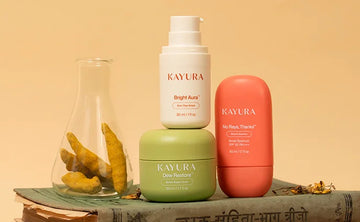
Kayura's Bright Aura Even Tone Serum pairs Curcuma Longa root extract with tranexamic acid, azelaic acid, and phenylethyl resorcinol. It works on the full pigmentation pathway without aggressive acids that compromise sensitive skin.

Benefit 3. Protection Against Oxidative Damage
There is environmental stress on your skin at all times. The free radicals, produced by UV rays, pollution, and everyday lifestyle, destroy collagen and weaken the skin in the long run. Curcumin assists in neutralizing these free radicals and also in supporting the antioxidant enzymes of the skin.
This results in:
- Reduced cellular stress
- Better protection from environmental damage
- Slower visible signs of aging

Benefit 4. Skin Barrier Repair Support
A damaged skin barrier is not just about dryness. It usually starts with ongoing inflammation due to daily stressors that keep the skin from repairing itself properly. Curcumin steps in at this stage. As a strong anti-inflammatory, it stops the triggers from slowing down repair. Once inflammation is under control, your skin's hydration improves, the barrier becomes stronger, and the skin becomes less reactive over time.
Kayura's Dew Restore Haldi Hydration Essence is designed around this process. It combines Curcuma Longa root extract with ceramides and aquaporin activators that calm the skin while supporting barrier recovery in one simple step.

Benefit 5. Support for Acne Treatment
Acne is driven by both excess oil and inflammation. Curcumin helps address both, but in a supportive way. Studies have shown that topical curcumin can reduce sebum production over time while also calming the inflammation around breakouts. This combination helps reduce redness and makes breakouts less aggressive.
It helps by:
- Calming inflamed breakouts
- Reducing oxidative stress in acne-prone skin
- Supporting a less reactive environment
But it does not replace a proper acne treatment. It supports recovery, not prevention, on its own.

Benefit 6. Recovery from UV and Environmental Stress
UV exposure triggers more than just tanning. It creates inflammation and oxidative damage at a deeper level. Curcumin helps reduce this damage by:
- Lowering UV-induced inflammation
- Limiting oxidative stress
- Supporting post-exposure repair

Benefit 7. Improved Skin Balance and Comfort
This is the benefit people notice first, even if they cannot always explain it. When inflammation is reduced, oxidative stress is controlled, and the barrier is supported, skin becomes more stable. It reacts less, feels calmer, and becomes easier to manage.
You may notice:
- Fewer sudden flare-ups
- More consistent texture
- Better tolerance to actives
This is why turmeric fits well into a minimalist skincare routine. It supports overall skin function without adding unnecessary complexity.

How To Use Turmeric In A Routine?
If you are adding turmeric to your routine, keep it simple.
- Use it in a formulated product.
- Apply it after cleansing.
- Follow with a hydrating moisturizer.
- In the morning, always finish with SPF.
If you layer multiple products, follow the right order of skincare products approach: lighter textures first, richer textures later. That keeps the routine sensible and easier for the skin to handle.

The Takeaway!
Curcumin, the active compound in turmeric, can help the skin with inflammation, uneven tone, and dullness. But it should not be the only thing you rely on. It works best when you use it as part of a simple, well-balanced routine. This is when you start seeing visible results, usually within 3 to 4 weeks of consistent use. Kayura's products are made with this approach in mind. The formulas are designed to target pigmentation and calm the skin, without being too harsh or overwhelming. Start with a routine that actually suits your skin with gentle and effective products.

Also Read:
- Dermatologist-Tested Skin Care: What That Label Really Means
- Turmeric Benefits for Skin You Didn’t Know About
More Useful Links:
Haldi Hydration Essence | Bright Aura Even Tone Serum | Dew Restore Barrier Repair Cream
Frequently Asked Questions
Mostly, yes. But if your skin reacts easily, start slow. Patch test first. Even calming ingredients can feel overwhelming on already stressed skin.
It can help calm inflamed breakouts and reduce redness. But it does not unclog pores or control oil fully, so you still need a proper acne treatment.
Curcumin usually takes 3 to 4 weeks to show visible results with calmer, more balanced skin. However, pigmentation and deeper concerns will take longer, about 8 to 12 weeks, with consistent use.
It helps support recovery, but it cannot do it alone. Your skin still needs ceramides, hydration, and a gentle routine to properly rebuild the barrier.
For targeted skin concerns, yes. A topical serum with liposomal delivery gets curcumin directly to the skin layers where pigmentation, inflammation, and oxidative damage originate. A supplement distributes itself systemically, with very little reaching the facial skin specifically.


Dew Restore™ Essence
Haldi Hydration Essence


Karma Boost™
Vitamin C + Antioxidant Serum


Golden Legacy™
Traditional Scalp & Hair Oil


No Rays, Thanks™
Mineral Sunscreen SPF 50 PA++++


