


Why Your Skincare Routine Fails Without SPF


15/04/2026
If there's one skincare product that gets skipped the most, it's sunscreen. The very one that should be used the most. We all know SPF isn't just another step. It's the step that makes every other step worth doing.
So at this point… go SPF or go home.
Plot twist: You still need SPF at home.

How Sun Exposure Affects Your Skin
The sun is the most consistent stress your skin faces. Every single day it triggers:
- Collagen breakdown
- Pigmentation signals
- Oxidative stress
- Barrier damage
- DNA damage inside skin cells
- Chronic low-level inflammation
It doesn't come as much of a surprise that up to 80% of visible skin aging is linked to sun exposure. Dermatology calls this photoaging.
And photoaging doesn't happen overnight. UV damage is cumulative. The skin remembers yesterday's exposure. And the day before that. Which means sunscreen is not just protection for today's skin. It's protection for the skin you'll have ten years from now.

Your Skincare Doesn't Matter Without Sunscreen
So imagine this is you every morning:
- You cleanse your skin
- Apply a powerful serum
- Moisturize with a barrier-loving formula
- …and then step outside without protection
You can use the best vitamin C, the best pigmentation serum, and the richest barrier cream, but without sunscreen, the sun quietly reverses most of that progress.

Signs Your Routine Is Missing SPF
If sunscreen is missing from your routine, your skin may start showing certain changes. Here are a few signs UV exposure might be affecting your skin.
- Pigmentation keeps returning: You treat dark spots, they fade, and then they slowly reappear. While there can be multiple underlying factors, one of the major reasons is that UV rays continuously trigger melanin production.
- Your skin looks dull by midday: Sun exposure generates oxidative stress that drains skin of its natural brightness.
- Fine lines appear earlier than expected: UV radiation breaks down collagen, the protein responsible for skin firmness.
- Your barrier feels constantly stressed: Redness, irritation, and dryness can worsen when skin faces daily UV exposure without protection.
When sunscreen becomes consistent, many of these concerns begin to vanish.

A Routine That Actually Works
A routine that delivers results usually does four things well: Defend. Correct. Strengthen. Protect.
Disclaimer: Product enthusiasm incoming. Yes, you'll see our products mentioned here. That's simply because we created them with these exact goals in mind. If you're already thinking about building a smarter routine, we just made the product hunt easier.
Defend with Antioxidants
Start your morning with an antioxidant serum. Look for ingredients like Vitamin C or resveratrol that help neutralize free radicals from UV exposure and pollution.
Karma Boost Vitamin C + Antioxidant Serum combines liposomal Vitamin C, niacinamide and resveratrol for layered antioxidant protection. Clinical testing showed 80% reduction in fine lines and 25% improvement in radiance.
Correct Uneven Tone
Next, a brightening serum to tackle uneven tone and dark spots. Alpha arbutin, tranexamic acid, azelaic acid, and niacinamide are the ingredients doing the work.
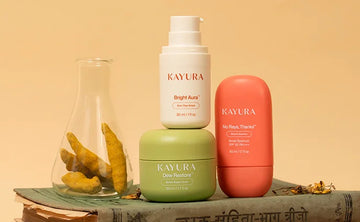
Bright Aura Even Tone Serum hits three pigment pathways at once: clears existing pigment, slows new formation, and stops it from spreading. Smarter for stubborn, recurring spots. Third-party testing showed 83% improvement in skin tone evenness and 93% reduction in melasma severity.
Strengthen the Skin Barrier
Follow with a barrier-supporting moisturizer. Look for ceramides, peptides, squalane, and magnesium PCA. They replenish lipids, lock in moisture, and calm sensitivity.
Dew Restore Barrier Repair Cream does all of this. It reinforces the barrier, prevents moisture loss, and supports recovery. Third-party testing showed 92% less dryness and a 160% hydration boost. Plus, it's National Eczema Association accepted.
Protect the Results with SPF
Always finish with SPF. It's the step that makes everything else actually work. Go broad-spectrum, SPF 30 or higher, water-resistant. If your skin is sensitive, a mineral sunscreen with zinc oxide is your best bet. And remember, sunscreen works best when it's reapplied every few hours.
We know how easy it is to skip. So we made sure you won't. Every order now comes with a sunscreen, on us. Meet No Rays Thanks Mineral Sunscreen SPF 50 PA++++.

The Sunscreen You're Getting
It's formulated with:
- Non-nano zinc oxide for powerful, broad-spectrum protection
- Ectoine to defend against environmental and blue-light stress
- Antioxidant plant actives to fight free radicals from past sun damage
Plus, it's National Eczema Association accepted, meeting one of the strictest safety standards for sensitive skin.
- No clogged pores
- No greasy finish
- Zero white cast
Just a lightweight mineral SPF that layers beautifully under makeup and fits effortlessly into your morning routine. Because if sunscreen is the step that makes skincare work, it shouldn't be the one you skip.

The Philosophy Behind Never Skip SPF
Most people skip sunscreen because the benefits aren't instant. The damage it prevents shows up years later. We want to change that. So we decided to make it easier for you not to skip sunscreen.
Which is why we say: Never Skip SPF.
- Not on cloudy days
- Not on quick errands
- Not even at home
¹ Poljsak B. Decreasing Oxidative Stress and Retarding the Aging Process. Nova Science; 2010.
Also Read:
- Glow Without the Chaos: The Only Barrier Repair Cream Guide You Actually Need
- Can Sunscreen Help Fade Dark Spots? Here's What The Research Says
More Useful Links:
No Rays Thanks Mineral Sunscreen | Karma Boost Vitamin C Serum | Dew Restore Barrier Repair Cream
Frequently Asked Questions
Yes. UVA rays penetrate windows and contribute to collagen breakdown and pigmentation even indoors. Blue light from screens also generates oxidative stress. SPF is still relevant inside.
Every two to three hours when outdoors, or immediately after sweating or swimming. A single morning application is not enough for all-day protection.
Mineral sunscreens use zinc oxide or titanium dioxide which sit on top of the skin and reflect UV rays. They are less likely to cause irritation compared to chemical filters that absorb into the skin.
No. Up to 80% of UV rays pass through clouds. Cloud cover does not reduce UV exposure significantly enough to skip protection.


Dew Restore™ Essence
Haldi Hydration Essence


Karma Boost™
Vitamin C + Antioxidant Serum


Golden Legacy™
Traditional Scalp & Hair Oil


No Rays, Thanks™
Mineral Sunscreen SPF 50 PA++++


